Either we act now, or we fall behind
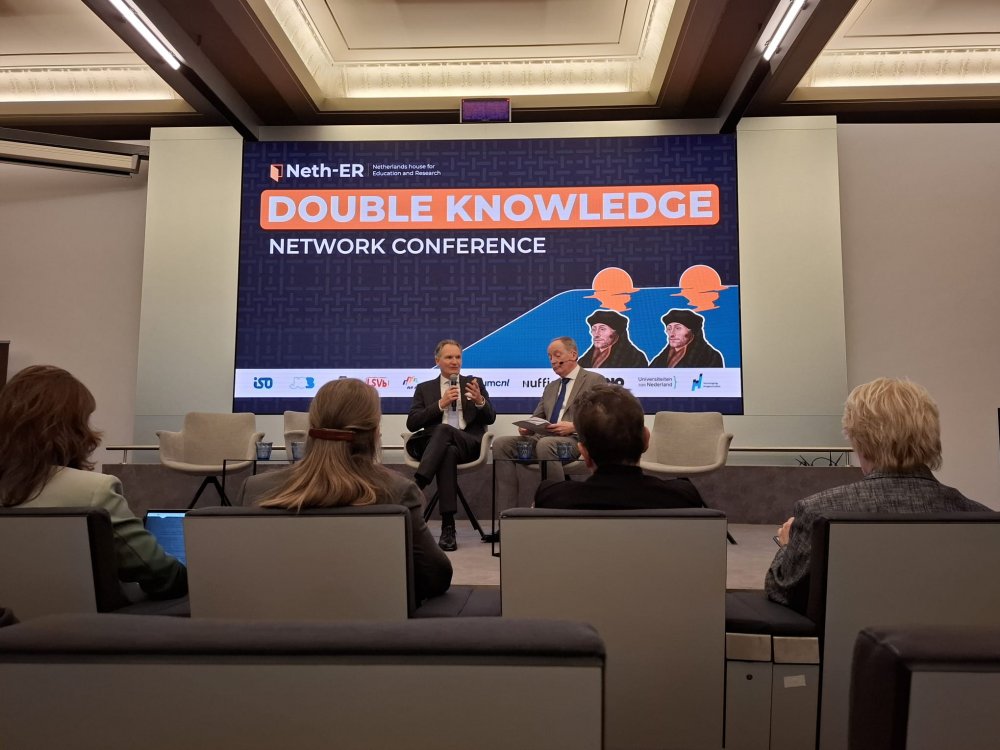
Jurgen Rienks, Director of Neth-ER opened the event and introduced Robert-Jan Smits, the newly elected President, who joins Neth-ER at a crucial moment: choices made now will shape Europe’s future knowledge ecosystems. Robert-Jan Smits, former President of the Board atthe Eindhoven University of Technology and a long-time advocate for European research cooperation, stressed that all the analyses are already there; all reports point in the same direction: “Now is the moment for Europe to walk the talk. We need to move from reports to implementation.” Diplomatically, Smits warned that competitiveness alone cannot drive Europe; democracy, academic freedom and shared values are equally at stake. Rienks put it more bluntly: “We either invest in knowledge now or prepare for UNESCO World Heritage status.”
Europe’s strength is collaboration
Smits reflected on Europe’s innovation ecosystems and the triple helix, citing Brainport Eindhoven as an example where universities, applied universities (HBO) and VET institutions collaborate seamlessly. It shows the power we have in Europe: if we manage to interconnect and invest in these regional ecosystems, it can replicate the success of CERN or Airbus in other fields. “It’s not just five minutes to midnight, it’s time to move now.” But Smits is optimistic and sees a future in which Europe is again the continent of which we can be very proud. “When Europe works together, no one can beat us,” he concluded.
It's time to close the gap
Prof. Dr. Robbert Dijkgraaf, former Dutch Minister of Education, Culture and Science and as of 2025, President-Elect of the International Science Council, delivered the keynote, describing modern science as Europe’s gift to the world: a unique combination of competition and collaboration and cultural openness. Yet, at a time of geopolitical tension and rapidly accelerating technologies, Europe is falling behind. The gap in research investment between the US and the EU now amounts to €270 billion per year. China leads in 57 of today’s strategic technologies, the US in 7, Europe in none. “One year AD (“After Draghi”), he warns that Europe’s fragmented, sometimes even contradictory policies are holding it back, making “the whole less than the sum of its parts.”

A Research & Innovation Union for the public good
Dijkgraaf called for a Research and Innovation Union, where national policies align strategically rather than contradict one another, and where alignment means focus, not uniformity. Europe has unique strengths to build on: its long-term stability, pluralism, openness to the world, and citizen-centred approach. “On a Scrabble board of Europe, Dijkgraaf metaphorically remarked, “research infrastructure”, would have triple word value.” These large-scale infrastructures go far beyond the financial and organisational capacity of the individual countries, enabling cutting-edge technology, public-private collaboration, and impact for small and medium enterprises.
Strategic, inclusive and free R&I avoiding the ‘muddy middle’
At the same time, Dijkgraaf warned against the “muddy middle ground” – research that is neither strategic, nor bottom up, nor curiosity-driven – advocating for a balance between top-down strategic initiatives with bottom-up, high-risk, high-reward projects. Europe must also avoid societal fault lines and embrace the full spectrum of institutions, from research universities to VET providers, recognising that applied, transdisciplinary, accessible knowledge is essential to solving societal challenges. Finally, he urged Europe to protect academic freedom, including politically sensitive research, and to ensure R&I visibly serves the public interest. Echoing Smits’ optimism, Dijkgraaf concluded: “It is a unique moment in time and Europe must take the lead.”
Student perspectives on Europe
Three student pitches, woven through the conference, showed how Erasmus+ makes Europe tangible. Dayan Mangal, board member of the Union of Vocational Students, JOBmbo, highlighted the gap between interest and opportunity for VET students: while half would like to do an internship abroad, only about 8% get the chance. He called for greater investment in Erasmus+ so that every student can access these opportunities. Thomas Walta from the Delft University of Technology reflected on the transformative power of Erasmus+: specialised knowledge gained abroad enriches projects and research. Erasmus+, he noted, is a blueprint for science and collaboration in Europe, educating students to contribute to future research and innovation. Alessio Gottardo, master student at Hanze University of Applied Sciences, shared how youth exchanges allowed him to experience Europe as a citizen, rather than a tourist. He gained intercultural dialogue and fundamental civic skills he now applies daily in his master’s programme. His Italian identity now coexists with the feeling of European belonging, he concluded beautifully, “enriched by the collaboration of our singularities.”

Future of education and the Union of Skills
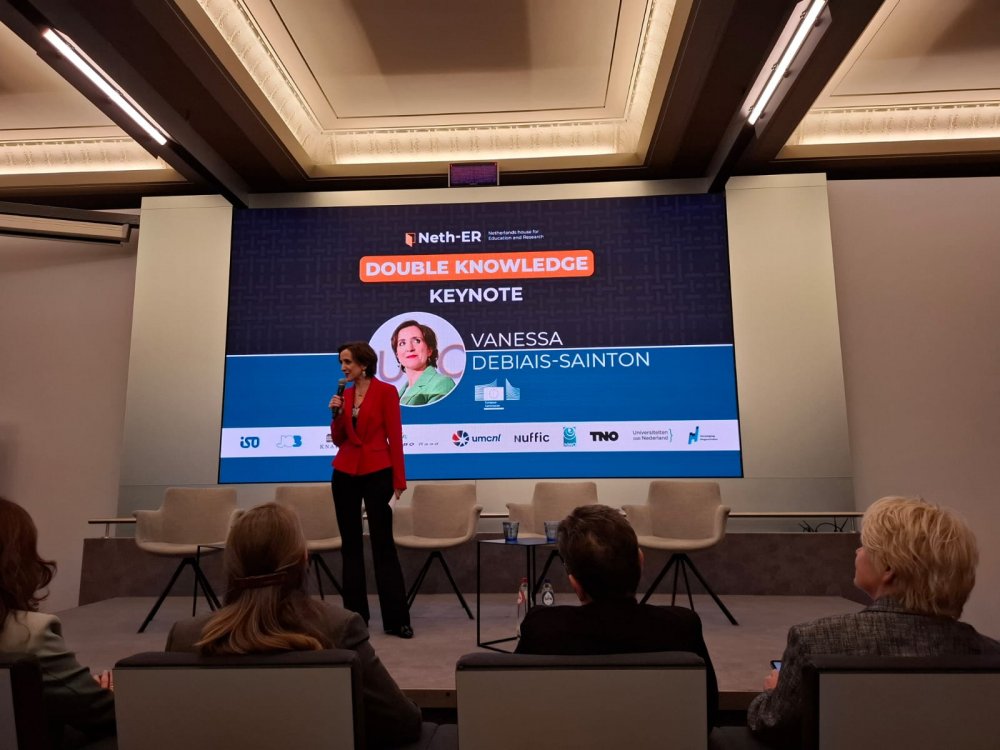
Vanessa Debiais-Sainton, member of the cabinet of Executive Vice-President Roxana Mînzatu, addressed the changing realities of Europe’s education and labour markets, stressing two priorities reflected in Mînzatu’s agenda. One, mastering the basics: literacy, maths, science, digital and civic skills. Two, advanced skills for a fast-changing society: ensuring graduates choose to build their futures in Europe. To keep pace with the world, she underlines the need for deep cooperation through European Universities Alliances, Centres of Vocational Excellence, a new EU VET strategy, and incentives such as Erasmus+ STEM scholarships. She also highlighted the ambition for a 5th freedom of knowledge and a European Degree. “Education cannot be separated from the rest of our policies,” she said, calling for a collective responsibility across member states, business, and society to align education, training, and employment with Europe’s strategic goals.
Expert voices on the European Commission plans
The panel composed of Dr. Gaby Allard, Dutch VET Council Board Member and Executive Board Member ROC Amsterdam | Flevoland, Prof. Dr. Annelien Bredenoord, President of the Board of Directors of Erasmus University Rotterdam, Marjan Hammersma, President of Avans University of Applied Sciences and member of the boardTreasurer at Neth-ER, and Prof. Dr. Annemie Schols, Vice-President Executive of Maastricht UMC+, shared a common concern: the EU’s proposed budget falls short of its ambitions. Allard welcomed the attention to skills, mobility, competitiveness the human agenda, while noting areas needing debate. Bredenoord stressed that Europe’s objectives talent, knowledge, values, and democracy require concrete financial support. Hammersma called the proposals “evolutionary, rather than revolutionary.” The discussion also highlighted that investing in knowledge is more than worthwhile: “Every euro invested in research returns more than ten.”

Co-designed and value-driven education, research & innovation
Schols and Hammersma underlined that societal challenges such as chemical drug pollution, chronic disease and climate adaptation require scale, and can only be tackled together. Bredenoord raised the concern of attracting and retaining talent. A significant drop in international students, she noted, could cost the economy billions and undermine the labour market. Allard pointed to the success of Dutch regional initiatives and Centres of Vocational Excellence, emphasising the importance of connecting education with the labour market and expanding mobility opportunities. Innovation also happens at the heart of education, she noted, which can speed up solutions to our societal challenges. Finally, Bredenoord emphasised that research agendas must be co-designed with scientists to avoid excessive politicisation. This also calls for better integration of social sciences and humanities (SSH), ensuring Europe’s innovation is value-driven and inclusive.
Protect democracy in R&I agenda
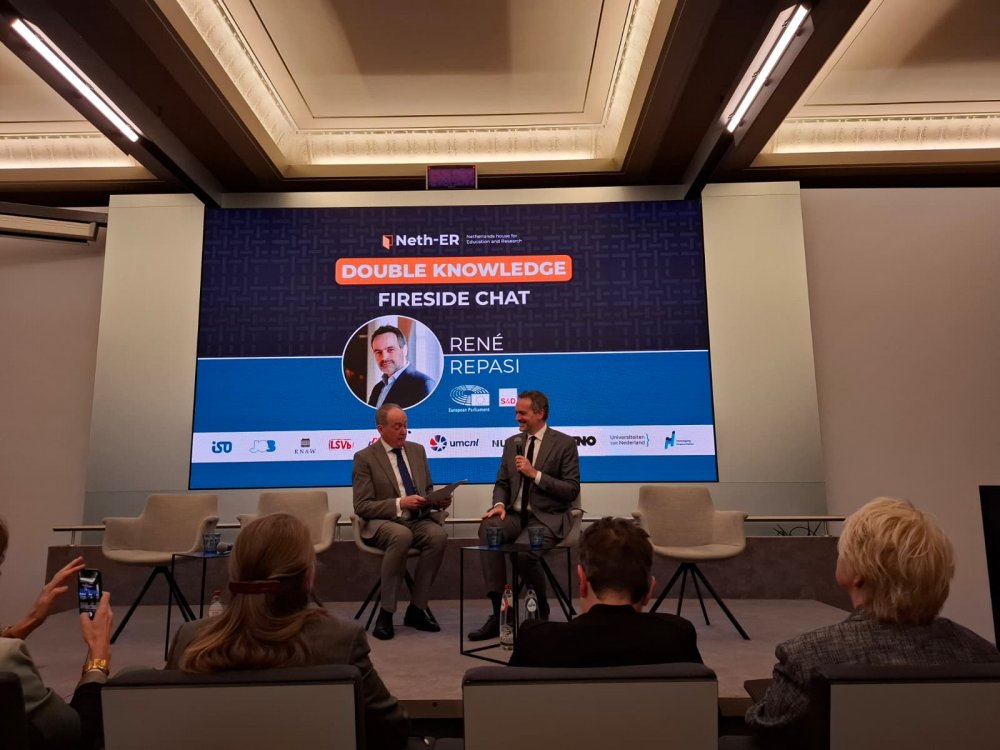
René Repasi, Member of the European Parliament and Professor of Public and Private Interests a Erasmus University Rotterdam, weighed in on the debate. He is cautiously optimistic about the Commission proposals, but warned against overly technocratic budget mechanisms that bypass democratic scrutiny. While endorsing the need for flexibility in the EU budget, especially to respond to crises, he underscored that research funding should not be siphoned off to other areas. Repasi also warned against “over-specifying” programmes: arguing that priorities should be sharpened by the research community rather than having bureaucrats dictate every detail, which, he noted, tends to serve the interests of the corporate lobby rather than the public good. Despite growing ideological divides in Parliament on many topics, Repasi remains optimistic: “In research and innovation, we still find broad support in the centre.” Nevertheless, we must not become complacent: “We are ten minutes into the match. Nothing is secured yet.”
United Through Knowledge
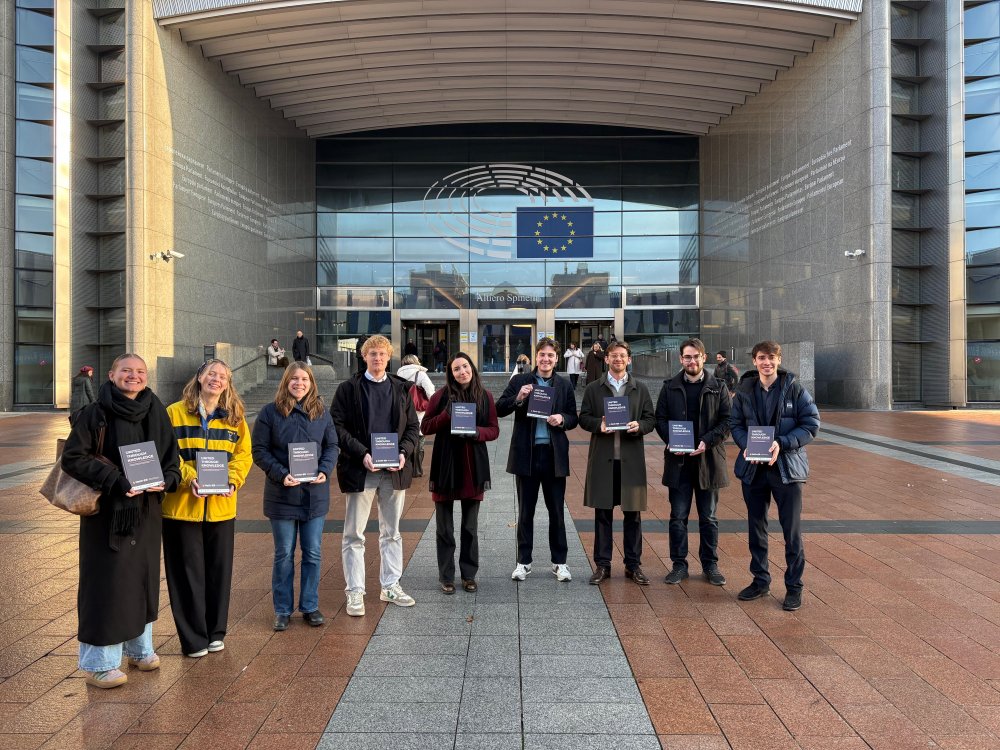
In the final moments, Neth-ER presented its new publication United Through Knowledge. A fitting title, as the publication is all about international cooperation in education, research and innovation, and was co-authored by partners across the Dutch knowledge sector. United Through Knowledge showcases 24 international projects funded by the EU through knowledge programmes such as Erasmus+ and Horizon Europe. The book highlights the impact of cross-border collaboration, joint agenda-setting and EU investments in knowledge. Robert-Jan Smits presented the first copy to Repasi, marking an important moment as negotiations continue towards the next MFF, including the successors of Erasmus+ and Horizon Europe.
More than the sum of its parts
Repasi called the publication “timely” and cautioned against national policies that risk undermining the knowledge economy at precisely the moment when collaboration and openness matter most. Jurgen Rienks closed the event with one clear message: “If Europe wants a future based on competitiveness and values, we must double our investment in knowledge. The whole must finally become more than the sum of its parts.”
Context
Each year, the Netherlands House for Education and Research (Neth-ER) organises a network conference in Brussels, bringing together policymakers, journalists, students, and other members of the broader knowledge community. Last year’s edition featured contributions from Alexandr Hobza, Chief Economist at the Directorate-General for Research and Innovation; Conny Aerts, professor at KU Leuven; and MEPs Marit Maij and Tom Berendsen, among others. Watch the aftermovie of “Investing in Knowledge & Changing Global Perspectives”.


